By: Lisa Wei
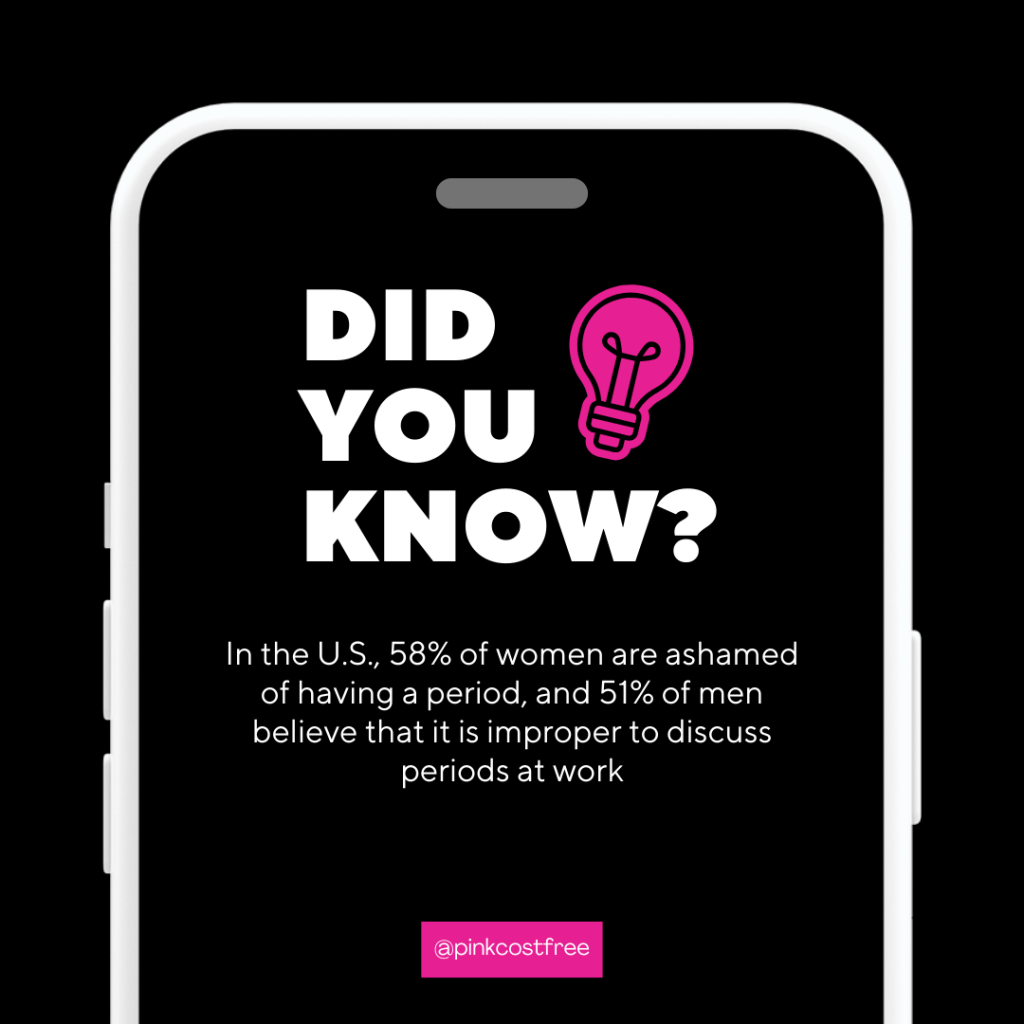
According to the National Institutes of Health (NIH), around 1.8 billion people menstruate every month, which is over 20% of the global population. Yet, despite being a significant portion of society, periods are largely stigmatized around the world. In the U.S., for example, 75% of teens say there is a negative association that periods are gross and unsanitary, and 60% agree that society teaches people to be ashamed of their periods (Thinx, Inc. & Period).
So, what is period stigma? A stigma is a mark of disgrace associated with a person, a personal quality, or a personal circumstance (Oxford Dictionary). Period stigma refers to the negative social and cultural attitudes, beliefs, and practices surrounding menstruation. It encompasses the perception of menstruation as impure, shameful, or a sign of weakness.
In many cultures around the world, periods are seen as a taboo topic and “unsanitary”. In China, for instance, menstruating women have historically been banned from temples due to beliefs that periods are “impure.” Even today, some temples continue this practice. Many Chinese women also avoid saying “period” outright, instead using euphemisms like “Big Aunt” or “that” to avoid discussing it openly. In addition to increased feelings of shame and hypervigilance, period stigma also limits participation in society. Due to social taboos and a lack of access to menstruation products, many people miss school because of the fear of being ridiculed for staining their school uniforms during menstruation. The widespread perception of menstruation as unhygienic and dirty reinforces this exclusion, preventing menstruators from fully engaging in daily life.
One of the biggest contributors to period stigma is misinformation. Many people grow up learning that menstruation is something to be hidden or ashamed of, leading to widespread myths about periods being unclean, unnatural, or a sign of weakness. In some cultures, individuals are told they cannot cook, touch plants, or enter religious spaces while menstruating. Others believe that menstrual blood is toxic or that periods make people emotionally unstable. These myths, reinforced by lack of proper education, create barriers to open conversations about menstrual health, leaving many menstruators uninformed about their own bodies.
Beyond stigma, misinformation can have serious health consequences. A lack of understanding about menstrual hygiene can lead to unsafe practices, such as using unhygienic materials in place of proper period products. In some communities, young menstruators may even believe they are sick or injured when they get their first period because no one ever taught them what to expect.
This is why PinkCostFree works to educate others about menstrual health, the impacts of period stigma, and period poverty. We believe that everyone deserves the right to understand their own body, and by working together, we can make the world a healthier place.
Works Cited
Rohatgi, Aishwarya, and Sambit Dash. “Period Poverty and Mental Health of Menstruators during COVID-19 Pandemic: Lessons and Implications for the Future.” Frontiers in Global Women’s Health, vol. 4, no. 1128169, 1 Mar. 2023, https://doi.org/10.3389/fgwh.2023.1128169.
Thinx, Inc. & PERIOD. “State of the Period 2023.” Period.org, 2023, period.org/uploads/2023-State-of-the-Period-Study.pdf.
Zhang, Chi. “Tampon Tax: Chinese Women Are Breaking Period Taboos to Campaign for Lower Prices.” The Conversation, 7 Mar. 2024, theconversation.com/tampon-tax-chinese-women-are-breaking-period-taboos-to-campaign-for-lower-prices-223586.
 pinkcostfree.org
Leave a comment