By: Richelle Yao
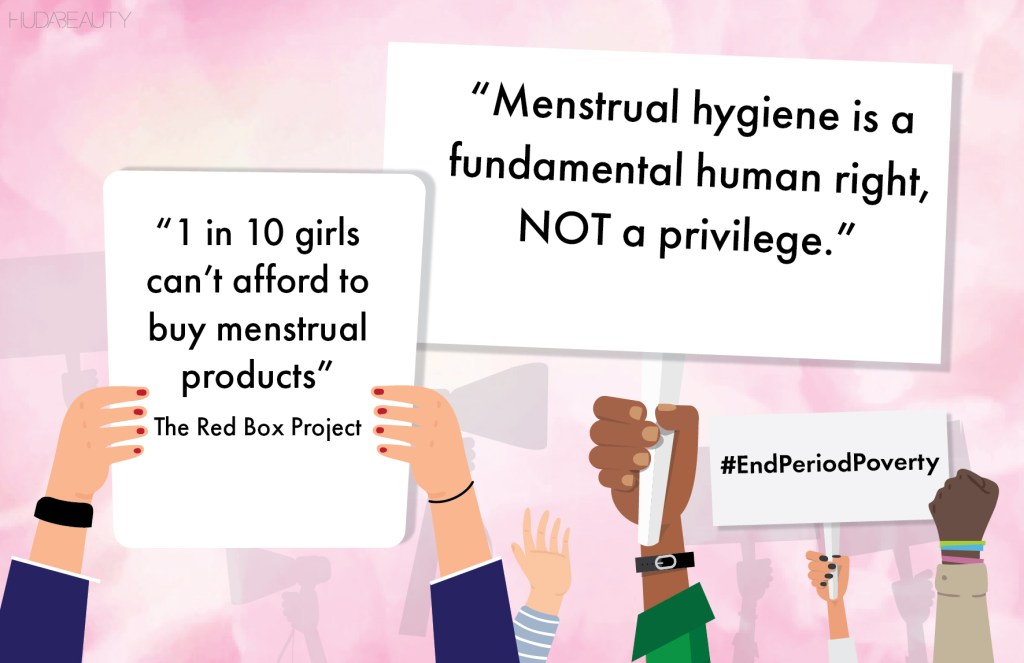
Did you know that according to the National Library of Medicine, over 500 million people globally are struggling with period poverty? Period poverty doesn’t only refer to the lack of menstrual products but also relates to larger issues such as gender inequality, health disparities, and homelessness, affecting millions of people worldwide.
According to BMC Public Health, people in poverty face more difficulties related to menstruation, a situation worsened by the COVID-19 pandemic. The need for improved services and policies to address period equity and mental and physical well-being is crucial. Insufficient menstrual hygiene can lead to infections, reproductive health issues, and emotional distress, all of which contribute to broader public health concerns.
Menstrual health is also closely related to gender equality. The World Economic Forum emphasizes how closing the menstrual health gap is essential for promoting gender equality. Disparities in menstrual health limited opportunities for women and girls in areas such as education (SDG 4), economic participation (SDG 8), and societal engagement (SDG 5). By addressing period poverty, societies can promote gender equality and achieve many of the UN Sustainable Development Goals (SDGs).
So, what can we do to address and improve period poverty?
Policy development, educational improvements, and increased healthcare access are key strategies to improve this situation. Implementing policies that provide free access to menstrual products in schools and public spaces is a critical step toward menstrual equity. Additionally, promoting menstrual health education to reduce stigma and empower individuals is also essential. Ensuring that homeless individuals have access to necessary healthcare services, including menstrual health care can help reduce stigma and empower individuals to advocate for their rights.
For individuals, some practical ways to help include donating to organizations working to fight period poverty, spreading awareness, and supporting local churches and community organizations that assist those in need. Every effort counts in making a meaningful difference in the lives of those struggling with period poverty.
Works Cited
DeMaria, A.L. et al. (2024) Menstruating while homeless: Navigating access to products, spaces, and services – BMC public health, BioMed Central. Available at: https://bmcpublichealth.biomedcentral.com/articles/10.1186/s12889-024-18379-z (Accessed: 17 February 2025).
Jaafar, H., Ismail, S.Y. and Azzeri, A. (2023) Period poverty: A neglected public health issue, Korean Journal of family medicine. Available at: https://pmc.ncbi.nlm.nih.gov/articles/PMC10372806/ (Accessed: 17 February 2025).
What’s the Menstrual Health Gap and why should we close it? World Economic Forum. Available at: https://www.weforum.org/stories/2025/01/menstrual-health-and-sustainable-development/ (Accessed: 17 February 2025).
 pinkcostfree.org
Leave a comment